Proper Paddleboard Inflation
Proper Paddleboard Inflation
If you own an inflatable paddleboard or plan to use one for your next lake day, learning proper paddleboard inflation is one of the most important skills you can have. Inflating your board to the correct pressure helps it feel more stable, paddle better, last longer, and perform the way it was designed to. A board that is underinflated can feel soft and unstable on the water, while a board that is inflated incorrectly can create unnecessary wear or frustration before you even launch.
The good news is that how to inflate a paddleboard properly is not difficult once you understand the basics. This guide covers everything you need to know about inflatable SUP pressure, pump setup, inflation steps, common mistakes, and how to make sure your board is ready for a safe and enjoyable day on the water.
If you would rather skip the setup process and get straight to the fun part, Float Shack makes it easy with convenient paddleboard rentals, beginner-friendly equipment, and local advice for enjoying the lakes near Crested Butte.
Why Proper Paddleboard Inflation Matters
A lot of beginners assume that as long as the board looks full, it is ready to go. That is not always true. Proper paddleboard inflation affects almost every part of the experience.
Better stability on the water
A properly inflated inflatable paddleboard feels firmer under your feet. That firmness helps with balance, especially for beginners.
Better paddling performance
When a board has the correct air pressure, it glides better and tracks more smoothly. A soft board tends to drag, flex, and feel slower.
Better durability
Using the right pressure helps the board perform as designed. Consistent, correct inflation can help reduce strain caused by improper use.
Better overall experience
Few things are more frustrating than getting to the lake and realizing your board feels floppy or unstable because it was not inflated enough.
That is why learning how to inflate an inflatable paddleboard correctly is worth the time.
What PSI Should a Paddleboard Be Inflated To?
One of the most common questions about proper paddleboard inflation is simple: how much air should go in the board?
Check the manufacturer’s recommended PSI
The best answer always starts with the board itself. Most inflatable paddleboards have a recommended PSI range printed near the valve or in the owner’s manual.
Why manufacturer guidance matters
Different paddleboards are built differently. Board size, materials, and construction all affect the right inflation range.
Most inflatable paddleboards fall in a common range
Many inflatable paddleboards are typically inflated somewhere around the mid-teens PSI range, but you should always follow the specific recommendation for your board rather than guessing.
Do not rely on feel alone
A board may feel mostly full long before it reaches the proper pressure. That is why a pump with a pressure gauge is so important.
The key point is simple: always inflate your paddleboard to the recommended PSI, not just until it looks inflated.
What You Need to Inflate a Paddleboard
Before you start, it helps to have the right setup. Inflating a board is much easier when you are prepared.
Inflatable paddleboard
Make sure the board is fully unrolled on a flat surface.
Pump with pressure gauge
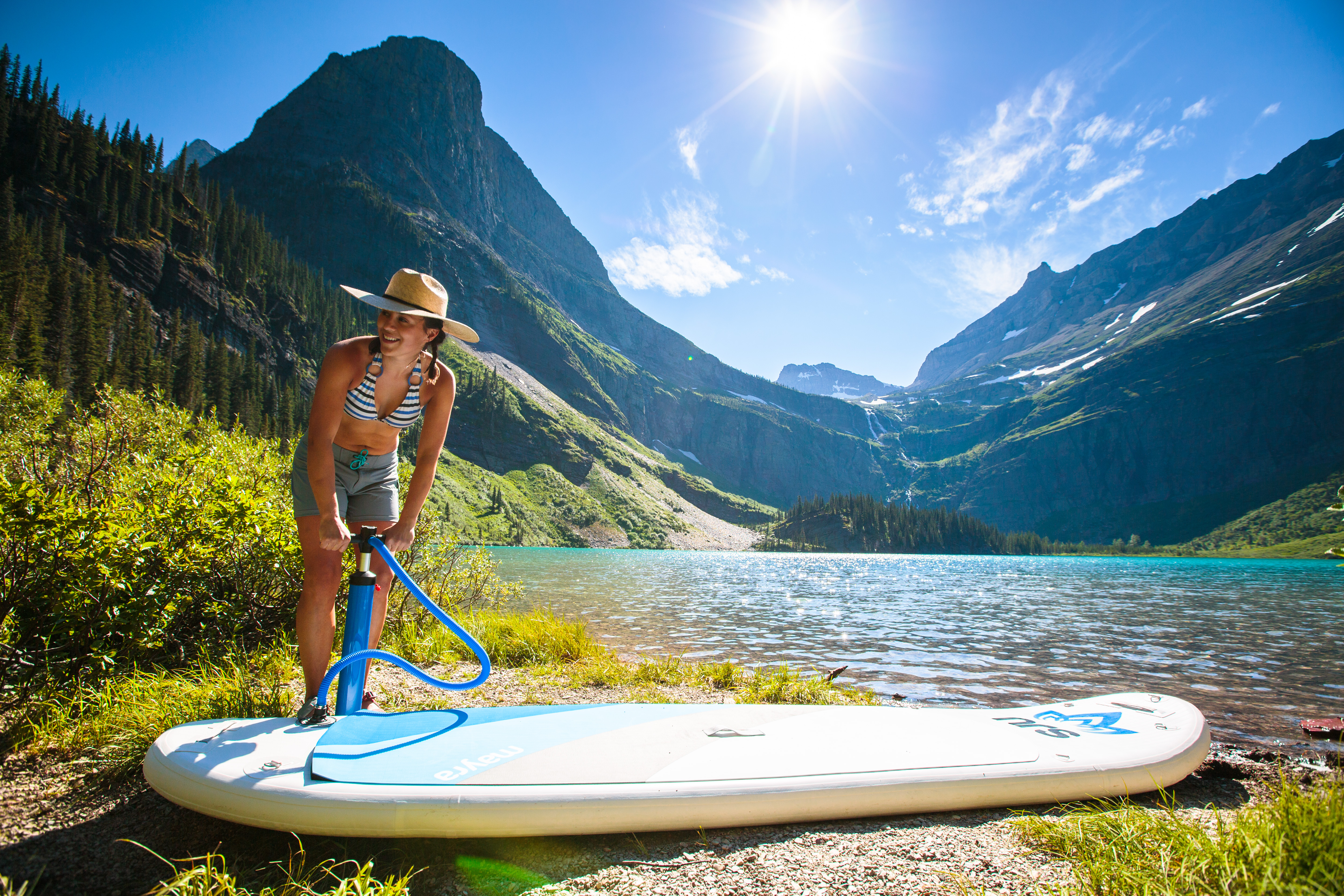
A hand pump with a gauge is one of the most common tools for inflating a paddleboard. It helps you know when the board reaches the correct pressure.
Correct hose attachment
Your hose needs to connect properly to both the pump and the board valve.
Flat space to work
Choose a clean, open area where the board can lay flat while you inflate it.
Optional electric pump
Some paddlers use electric pumps to make the process faster and easier. Even then, it is still important to monitor pressure and follow the board’s recommended PSI.
If you are new to the sport, rental boards can be a great way to avoid setup mistakes while you learn the basics.
How to Inflate a Paddleboard Properly
Learning how to inflate a paddleboard properly is easier when broken into simple steps.
Step 1: Unroll the paddleboard completely
Lay the board flat on a clean surface. Make sure it is fully open and not twisted.
Why this matters
Trying to inflate a partially rolled or uneven board makes the process harder and can cause awkward pressure buildup.
Step 2: Check the valve position
Before attaching the pump, inspect the inflation valve. Most inflatable paddleboards have a valve pin that needs to be in the correct position for inflation.
Inflation valve basics
On many boards, the valve needs to be in the closed or up position while inflating so air does not escape when you disconnect the pump.
If you are unsure, check your board’s instructions. This is one of the most common beginner mistakes.
Step 3: Attach the pump hose securely
Connect the hose firmly to the board valve. Make sure it is locked into place so air does not leak during inflation.
Step 4: Begin pumping
Start pumping steadily. At first, the board fills quickly and easily.
Early inflation is easier
The first part of the process usually feels fast because you are filling open space inside the board.
Step 5: Watch the pressure gauge
As the board begins to firm up, keep an eye on the gauge. This is how you know when you are getting close to the proper pressure range.
Step 6: Continue until the board reaches the recommended PSI
This is the most important step in proper paddleboard inflation. Stop when the board reaches the manufacturer’s recommended inflation pressure.
Step 7: Disconnect the pump carefully and close the valve cap
Once the board is inflated, remove the hose carefully and replace the valve cap securely.
That is the basic process for how to inflate an inflatable paddleboard correctly.
Why Underinflated Paddleboards Feel So Different
A lot of paddlers, especially beginners, do not realize how much a little missing pressure can affect performance.
Softer boards flex more
An underinflated board tends to bend more under your weight. This can make it feel unstable and less efficient on the water.
Balance becomes harder
When the board feels soft, it can wobble more and feel less predictable underfoot.
Paddling feels slower
A board that is not inflated enough often drags more in the water and loses the crisp, stable feel that makes paddleboarding easier.
Beginners may think they are the problem
Sometimes people assume they are just bad at paddleboarding when the real issue is that the board is too soft.
This is why proper paddleboard inflation matters so much for first-time paddlers. The right pressure can make the sport feel easier right away.
Can You Overinflate a Paddleboard?
Yes, it is possible to overinflate a paddleboard, which is another reason to follow the recommended PSI.
Too much pressure can stress the board
Overinflation may put unnecessary stress on seams, materials, and the overall structure of the board.
Heat can increase pressure
This is especially important on hot days. If the board is inflated and left sitting in direct sun, internal pressure can rise.
Follow the board’s pressure guidance
The safest habit is simple: inflate within the recommended range and be mindful of weather and direct sunlight.
This is one of the biggest reasons not to guess. A pressure gauge is your friend.
Best Time and Place to Inflate Your Paddleboard
Where and when you inflate the board can make the process easier.
Inflate on a flat, clean surface
Parking lots, grassy areas, and open flat spaces near the launch point are common choices. Just make sure there are no sharp rocks or objects underneath the board.
Inflate close to where you launch
Inflatable paddleboards are portable, but once fully inflated they become bulkier to carry. Inflating reasonably close to the water makes the process easier.
Avoid unnecessary time in strong direct sun
If possible, do not leave your fully inflated board baking in intense sun for long periods before using it.
These simple habits help make proper paddleboard inflation safer and more convenient.
How Long Does It Take to Inflate a Paddleboard?
Another common question is how long inflation takes.
Hand pumping takes effort
The exact time depends on the board size, the pump, and your pace, but it usually takes 20 minutes and becomes harder near the end as pressure builds.
The last PSI feels hardest
This is normal. The board fills more easily at first, then pumping becomes more challenging as you approach full pressure.
Electric pumps can save effort
Some paddlers prefer electric pumps for convenience, especially if they inflate often. Even then, you still need to watch pressure and avoid overinflation.
Knowing this ahead of time helps set realistic expectations, especially for beginners.
Common Paddleboard Inflation Mistakes
If you want to get proper paddleboard inflation right, it helps to know what mistakes to avoid.
Not checking the recommended PSI
Guessing instead of following the board’s specific pressure range is one of the biggest mistakes.
Forgetting the valve position
If the valve is in the wrong position, air may rush back out when you disconnect the pump.
Stopping too early
A board can look full but still be underinflated.
Ignoring the pressure gauge
The gauge exists for a reason. Use it instead of relying on appearance alone.
Leaving the board in extreme heat without thinking about pressure
Sun and heat can affect the air inside the board.
Pumping on rough or dirty ground
Sharp objects or rough surfaces can damage the board before you even get on the water.
Avoiding these mistakes makes the whole process smoother and helps the board perform better.
Proper Paddleboard Inflation for Beginners
If you are brand new to inflatable SUPs, do not overcomplicate it. A few basic habits will cover most of what you need.
Read the board’s instructions
Even if you have used another inflatable paddleboard before, check the details for the one you are using now.
Use a gauge every time
Do not guess.
Inflate fully before launching
Do not tell yourself you will “just make it work” if the board feels soft. Proper inflation affects stability and safety.
Take a few extra minutes to do it right
A small amount of setup time can make a big difference once you are on the water.
For beginners, one of the easiest ways to reduce setup stress is to rent a board and focus first on learning the sport itself.
How Weather Affects Paddleboard Inflation
Weather can play a role in how your board behaves.
Warm air can increase pressure
If the board sits in the sun after inflation, internal pressure may rise.
Cooler air can change how the board feels
Temperature changes can affect air pressure slightly, which is something to keep in mind if you inflate in one environment and use the board in another.
Mountain conditions matter
In places like Crested Butte, weather can shift quickly. It is smart to stay aware of changing conditions, not just on the water but during setup too.
This does not mean inflation has to be complicated. It just means being aware of the environment.
How to Deflate a Paddleboard After Use
Proper paddleboard care does not end with inflation. Deflating the board correctly helps with storage and long-term condition.
Dry the board if possible
Before packing it up, wipe it down or let it dry as much as you can.
Open the valve carefully
Release air according to the board’s instructions.
Roll the board evenly
Rolling it neatly makes storage easier and helps prevent unnecessary creasing or awkward folds.
Store it properly
A clean, dry board stored according to manufacturer guidance will generally stay in better condition.
Good setup and good pack-down go together.
Why Renting Can Be Easier Than Inflating Your Own Paddleboard
Inflatable boards are convenient, but not everyone wants to handle pumping, valve checks, and setup every time.
Rentals remove the setup hassle
You do not need to worry about pumps, PSI, or whether the board feels right.
Great for vacations and casual use
If you are visiting Crested Butte or only paddle occasionally, renting can be a much easier option.
Easier for beginners
Instead of learning board inflation and paddle technique all at once, you can focus on enjoying the water.
More time for the fun part
When setup is simple, the day feels more relaxed from the start.
That is why many visitors choose Float Shack for convenient paddleboard rentals instead of dealing with transport, inflation, and setup on their own.
Final Thoughts on Proper Paddleboard Inflation
Proper paddleboard inflation is one of the simplest ways to improve your paddleboarding experience. A board inflated to the correct PSI feels better, performs better, and gives you a much more stable platform on the water. The key steps are simple: unroll the board fully, check the valve, attach the pump securely, monitor the gauge, and stop at the recommended pressure.
It is easy to rush inflation, especially when you are excited to get on the lake, but taking a few extra minutes to do it right makes a big difference once you launch.
Ready to Enjoy Paddleboarding Without the Setup Stress?
If you want to skip pumping, packing, and setup and head straight for a great day on the water, Float Shack makes it easy with convenient paddleboard rentals, beginner-friendly boards, and local recommendations for the best paddle spots near Crested Butte.
Reserve your paddleboard with Float Shack today and enjoy a simple, stress-free day on the water in the mountains.